BOARD OF ADVISORS
Guided by experience and expertise.
Our Board of Advisors brings together respected voices from psychology, healthcare, business, and coaching. Together they help ensure The Resilient Mind stays rigorous, relevant, and true to its mission.
OUR ADVISORS
The minds shaping our direction
Each advisor contributes decades of expertise across the disciplines that make resilience training effective — from clinical psychology to organizational leadership.
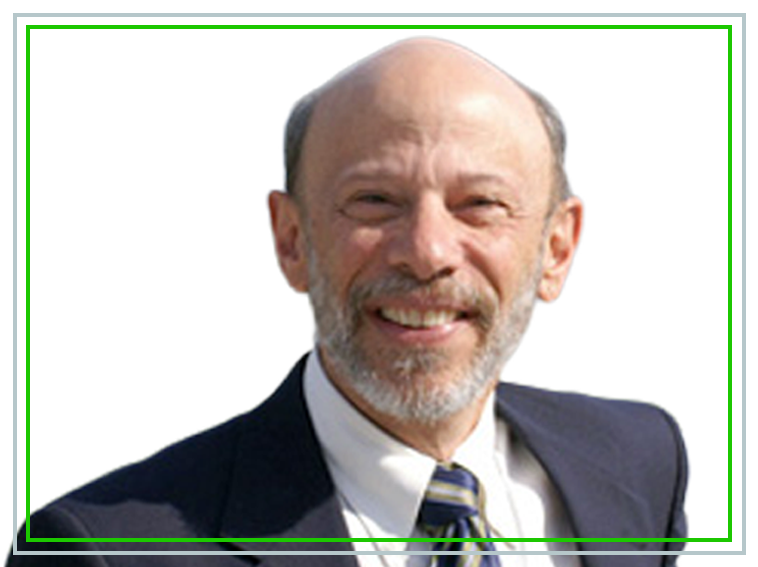
Dr. Bruce E. Wampold, PhD
PROFESSOR EMERITUS OF COUNSELING PSYCHOLOGY | UNIVERSITY OF WISCONSIN–MADISON
Dr. Bruce Wampold is an internationally recognized psychologist, researcher, and thought leader whose groundbreaking work has significantly influenced our understanding of human behaviour, psychotherapy, and the processes that help people achieve meaningful and lasting change.
Having previously served as Director of the Research Institute at Modum Bad Psychiatric Center in Norway, Dr. Wampold is currently a Professor Emeritus of Counseling Psychology at the University of Wisconsin–Madison.
Throughout his career, he has authored more than 200 scholarly publications and received numerous prestigious honours including:
- The American Psychological Association’s Award for Distinguished Professional Contributions to Applied Research.
- The Distinguished Research Career Award from the Society for Psychotherapy Research.
- The Gold Medal Award for Life Achievement in the Application of Psychology from the American Psychological Foundation.
- An honorary doctorate from Stockholm University in honor of his contributions to Swedish society.
Dr. Wampold is particularly recognized for developing and advancing the Contextual Model of Psychotherapy, which emphasizes the importance of healing in a social context and the benefits of clinician-patient relationship.
His landmark book, The Great Psychotherapy Debate: The Evidence for What Makes Psychotherapy Work, has helped reshape international discussions about effective psychological treatment and evidence-based practice.
Over his distinguished career, Dr. Wampold has spent decades investigating what truly helps people overcome psychological challenges and improve their well-being. Challenging conventional thinking about how people overcome psychological difficulties and achieve meaningful improvements in their lives, his influential research has demonstrated that successful psychological interventions depend on much more than specific techniques or treatment methods. Rather, his research has demonstrated the importance of human relationships, trust, personal expectations, and the broader psychosocial contextual conditions that support positive change.
His Contribution to The Resilient Mind
As a member of The Resilient Mind’s Advisory Board, Dr. Wampold brings exceptional scientific insight into the processes that support human development and psychological change. Dr. Wampold’s expertise is particularly relevant to The Resilient Mind’s mission of translating advances in behavioural and social sciences into practical learning experiences that help people strengthen resilience, emotional intelligence, and interpersonal relationships.
His extensive research into the conditions that support psychological change provides an important scientific foundation as TRM continues to develop its experiential, relationship-centred approach to human development.
As an Advisory Board member, Dr. Wampold brings decades of research experience and a deep understanding of the human factors that contribute to meaningful and sustainable behavioural change.
His participation reflects TRM’s commitment to grounding its approach in credible scientific research while making knowledge about human behaviour more accessible and practical for everyday life.

Dr. Lyle Oberg, M.D.
Board Member
A physician and politician by profession, Dr. Lyle Oberg is known in his research and study of social services delivery with specific populations such as in children and persons with disabilities. Born in 1960 in Alberta, Canada, Dr. Oberg was elected to the Legislative Assembly of Alberta as a Progressive Conservative (a provincial centre-right party in Alberta) in 1993. As an influencer and advocate, Dr. Oberg was appointed in 1997 as the Minister of Family and Social Services. Specifically, Dr. Oberg launched an initiative to address health, substance-use and abuse called the Fetal Alcohol Syndrome (FAS) which occur in a person whose mother drank alcohol during pregnancy which results in conditions that could affect the baby including low body weight, poor coordination, and behavior problems.
Dr. Oberg thus implemented an interprovincial strategic planning and application to broaden resources and implement better approaches for addressing FAS. Not only is Dr. Oberg a well-known physician, he is also very much involved in health and politics. Dr. Oberg introduced the Alberta Child Health Benefit Program; and was a key stakeholder and developer of the Protection of Children Involved in Prostitution Act. Family and Community-focused, Dr. Oberg’s participation and involvement in support and research in health, behavior, and law shows his skill and utmost strategy in helping and reaching various populations. Dr. Oberg was appointed as the Minister of Learning in May 1999, a post he held until November 2004. In addition to his engagement and participation in politics and medicine, Dr. Oberg also is involved with educational initiatives.
He was an active member of the Canadian Ministers of Education and led the Canadian delegation to an International Group of 8 (G8) Education Ministers meeting, which is an inter-governmental and political forum. He served as an overseer of the creation of Alberta’s Commission on Learning, with a focus and study on health and physical activity programs. In 2004, Dr. Oberg was appointed as the Minister of Infrastructure and Transportation. In December 2006, Dr. Oberg was named Minister of Finance in Premier Ed Stemach’s cabinet. In June 2010, Dr. Oberg created and opened the first private DNA testing facility in Canada called C2DNA which is located in Edmonton. Dr. Lyle Oberg’s research, study, and work in community-based settings with various populations such as children and persons with disabilities greatly impacted the research and application of evidence-based practice of The Resilient Mind Project. Both in the health and political setting, Dr. Oberg’s mindset revolves in initiatives and approaches in the mental and behavioral health programs in Canada. He now serves as one of the Business Advisor for The Resilient Mind Project.

Sharon Blady, PhD.
Clinical Advisor
Sharon began her career as an academic, teaching and researching across a variety of disciplines, honing the ability to optimize and connect information from diverse sources while ensuring accessible and cogent presentation and delivery. Her abilities in these areas were further utilized and enhanced when she was elected into the Manitoba Legislature and crafted two pieces of first-in-Canada legislation before being appointed a cabinet minister.
As Minister of Healthy Living, and later Minister of Health for the province of Manitoba, Sharon demonstrated strong competencies in her ability to work with stakeholders, departments, and front-line healthcare providers. Systems analysis, agility in addressing management issues and strategic planning we a key focus during her time in office and in working with clients today. Her history of mental health issues also provided unique insight into how to better reform mental health and healthcare policy through the lens of lived experience. Sharon’s leadership to The Resilient Mind clinical advisory team provides invaluable insights to ensure the resilience training is crafted to align with government short and long term preventative health planning.
Chris Sherback, CA
Clinical Advisory Board
Chris began his career as an auditor with Deloitte & Touche LLP, where he learned how various businesses approach the same problem with different system designs and varying levels of success. Having developed a flexible approach to problem solving, he then moved into the healthcare field by joining Ormed Information Systems, where he designed accounting and business management systems for hospitals and clinics. Chris soon became President & CEO of Ormed, which initially had only one product that ran in a handful of hospitals and clinics in Western Canada.
Over the course of the next 20 years, he used his role to guide Ormed into becoming an industry leader, with 25 products running in over 280 healthcare organizations throughout Canada and the United States. Chris plays a critical role in The Resilient Mind project by helping current and prospective clients move from a disease management model to a disease prevention model through the use of resilience training. (www.ormed.com)
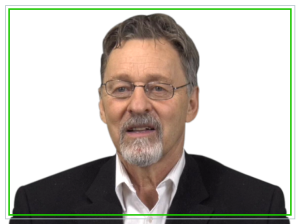
Vic LeBouthillier
Product Manager & Board Chairman
Vic has spent the past 28 years of his 38-year career in healthcare consulting and product development. His personal vision statement best reflects his focus:
“To close the gap between advances in behavioural health sciences and people who need the opportunity to optimize their psychological functioning and relationship skills.”
Since 1987, Vic has been focused on program development to improve individual self-care within populations, through group work and eventually integrating interactive web-based tools. In 1987 as a Business Consultant, he developed emotional intelligence and resilience training implemented in the workplace. In 1999 as CEO of Alive publishing group, he published information on the brain’s neuroplasticity and the link between relationship and mental health with a 1.4m monthly readers. Alive also distributed health-based accredited training courses in 3 continents.
In 2004 he founded the Alive for Wellness 30-day in-patient program for people desiring to overcome a mental health struggle and a 60-day app/telephone after care program which still operates today (www.aliveforwellness.life).
In 2008 he partnered with Dr. Scott Miller and Dr. Barry Duncan and and co-founded MyOutcomes (MyOutcomes.com), a clinical tool that helps behavioral health clinicians increase their clinical effectiveness and was a recipient of the national United Kingdom’s Mental Health Innovation Of The Year award. MyOutcomes is approved by the US Joint Commission and certified by the Substance Abuse and Mental Health Services Administration. MyOutcomes is currently used in over 24 countries by private and governmental mental health clinics, the US Military, and over 28 universities in clinical training. Over 13 randomized clinical trials confirm that using MyOutcomes can double the effect size of mental health clinicians.
In 2015, motivated to make advanced neural, behavioral, and social sciences more affordable and accessible to all people, Vic lead a group of thought-leading academics, clinical professionals, and educators and founded The Resilient Mind Project that supports and trains people who exhibit a readiness to change and wish to increase their resilience (www.theresilientmind.life). Full bio

Dr. Joti Samra
Chief Science Officer
Dr. Joti Samra, R.Psych. is the Clinic Founder of Dr. Joti Samra, R.Psych. & Associates, an expanding in-office and virtual counselling practice with associates throughout BC, and CEO & Founder of MyWorkplaceHealth, a full-suite national consultancy on psychological health and safety (PH&S) in the workplace. Dr. Samra is a highly-regarded expert in psychological health and safety (PH&S). Over the past two decades, she’s been involved in numerous national initiatives that have contributed to policy change in Canada. She’s a Founding & Ongoing Member of the CSA Technical Committee that developed the National Standard of Canada for Psychological Health & Safety in the Workplace (CAN/CSA-Z1003-13/BNQ9700-803/2013). This Standard is the first of its kind in the world and is shaping policy development for workplace PH&S at the international ISO level. Dr. Samra holds the role of Chief Science Officer for The Resilient Mind.